
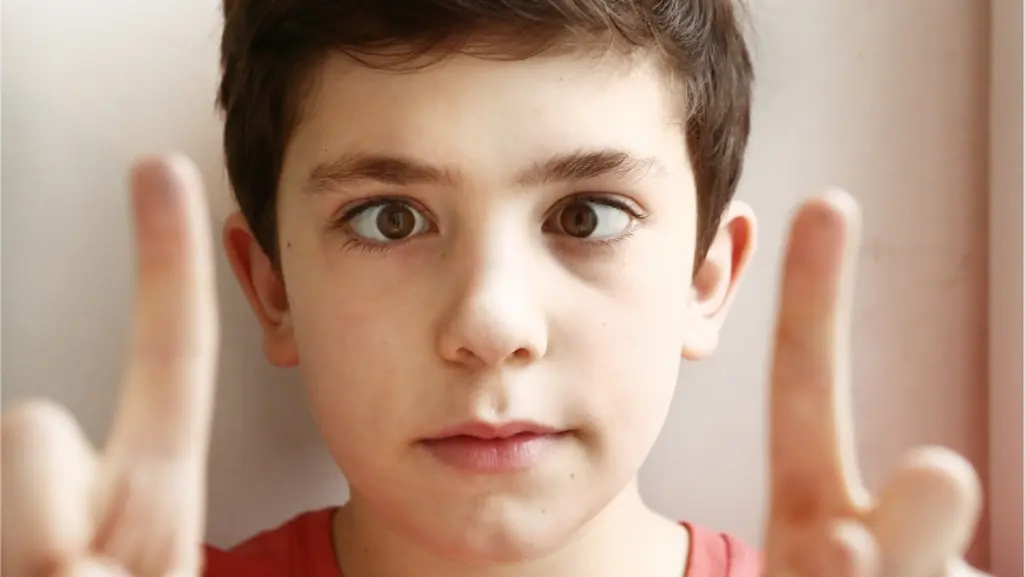
Have you noticed that your child’s eyes are not looking in the same direction?
One eye may appear to turn inward, outward, upward or downward while the other eye looks straight. Some parents describe this appearance using phrases such as “deer-like eyes” or crossed eyes.
Medically, this condition is called squint or strabismus.
A child with a squint should not simply be told that it is a normal or attractive feature. A squint can sometimes be associated with reduced vision in one eye or an underlying problem that needs assessment. Early evaluation is important because untreated eye misalignment in childhood can be associated with amblyopia, commonly called lazy eye, and reduced visual development.
The original case discussed in the Grace Hospital awareness video began with a mother’s question about her child’s eye appearing different from the other eye since childhood. The doctor emphasized that the two eyes should normally look in the same direction and that the reason for an eye turning away should be investigated.
A squint, also called strabismus, is a condition in which the two eyes do not point in the same direction at the same time.
One eye may turn:
The deviation may be present all the time or may appear only occasionally. Squint can occur in children as well as adults.
Quick answer for parents
If one eye repeatedly appears to look in a different direction from the other eye, your child should have an eye examination rather than assuming the appearance is harmless.
An eye that consistently appears to look in a different direction from the other eye should not automatically be considered normal. It may represent a squint or another eye-alignment problem.
The expression “deer-like eyes” is not the medical diagnosis. The important question is whether the eyes are properly aligned and whether both eyes are developing normal vision.
The source video describes a child whose mother noticed this appearance from childhood and was unsure whether treatment was necessary. The doctor explained that healthy eyes should normally be directed together and recommended identifying the cause when one eye deviates.
Squint can have several causes, including focusing problems, differences in vision between the eyes, eye-movement abnormalities and, less commonly, neurological or other medical conditions.
In children, refractive errors such as long-sightedness, short-sightedness or astigmatism can be associated with squint. Other causes can involve the eye muscles, nerves or the systems that control eye movement.
Sometimes the exact cause is not immediately obvious.
That is why an eye examination is important.
Yes. Poor vision in one eye can be associated with eye misalignment, and a squint can also lead to reduced visual development in the affected eye.
When the eyes point in different directions, the brain may receive two different images. In a child, the brain can begin ignoring the image from the misaligned eye to avoid double vision. This can result in amblyopia or lazy eye.
This is one reason parents should not wait for a squint to “go away” without having the child’s vision assessed.
Yes. A squint can contribute to amblyopia, commonly known as lazy eye, in children.
Amblyopia means that vision in one eye does not develop normally. If a child consistently receives a poor-quality or misaligned image from one eye, the brain may suppress that eye’s visual information.
Treatment of amblyopia is generally more effective when started early.
This is an important distinction
Squint and lazy eye are not the same condition.
A squint describes eye misalignment.
Lazy eye, or amblyopia, describes reduced visual development in one eye.
They can occur together, but one does not mean exactly the same thing as the other.
Parents may notice:
A squint can be constant or intermittent.
A parent does not need to determine the type of squint at home. An eye specialist can assess the alignment and visual development.
A child with a persistent squint should have an eye examination, and parents should seek professional assessment whenever they are concerned about the child’s vision or eye alignment.
The NHS recommends medical assessment for a child with a constant squint and for children older than three months who have an intermittent squint. New squint or double vision later in life also requires assessment.
The important message is:
Do not wait simply because the child is young.
Early assessment can identify whether there is a refractive error, amblyopia or another cause that needs treatment.
Yes. Squint can often be managed with treatments such as glasses, amblyopia treatment, selected eye exercises, prisms in appropriate cases, and eye-muscle surgery when indicated.
The correct treatment depends on:
The American Association for Pediatric Ophthalmology and Strabismus lists glasses, eye exercises, prisms and eye-muscle surgery among possible treatments depending on the individual case.
Yes. In some children, glasses can significantly improve or even correct an eye turn when refractive error is contributing to the squint.
For example, certain children with long-sightedness may develop an inward-turning eye when focusing. Correcting the refractive error with appropriate glasses can help align the eyes.
However, not every type of squint can be corrected with glasses alone.
An ophthalmologist needs to determine the cause and prescribe the appropriate correction.
Eye exercises can help in selected types of eye-movement problems, but they are not appropriate for every squint.
The treatment should be decided after an eye examination.
The source video mentions eye exercises as one possible treatment in some situations, while established ophthalmic guidance also recognizes that exercises may help selected patients.
Parents should not start exercises found online without knowing what type of eye problem the child has.
Some children with squint may need eye-muscle surgery, particularly when glasses or other appropriate treatment do not adequately correct the eye alignment.
Squint surgery works by changing the position or tension of the muscles that control eye movement so that the eyes are better aligned.
Surgery is not automatically required for every child with squint.
The decision depends on the clinical examination, type and degree of deviation, visual development and response to other treatments.
Early assessment and treatment are important because untreated squint in childhood can affect visual development.
However, there is no single surgery age that applies to every child.
The source video discusses the importance of early treatment and states that surgery may be required in some cases appearing within the first six months, while treatment options can vary with age.
Current clinical guidance similarly emphasizes early management because amblyopia and abnormal visual development can become harder to correct with increasing age.
Therefore, parents should not wait until a child reaches a particular age before seeking an assessment.
The right time for treatment depends on the child’s individual diagnosis.
An untreated childhood squint can be associated with reduced visual development in one eye, persistent visual problems and difficulties with binocular vision.
Amblyopia is one of the important concerns because the brain may begin suppressing the image from the misaligned eye.
Treatment can also be important for proper eye coordination and, in appropriate cases, depth perception.
The earlier a visual-development problem is identified, the more opportunity there is to treat it effectively.
Yes. Squint can develop at any age, including adulthood.
A new squint or double vision in an adult should be medically assessed because adult-onset misalignment can have different causes, including neurological problems, trauma, vascular conditions and other medical disorders.
Therefore, a newly developed adult squint should not simply be treated as a cosmetic issue without evaluation.
Arrange an eye examination rather than waiting to see whether the eye becomes straight on its own.
An ophthalmologist can assess:
A complete examination is especially important when the squint is persistent, increasing, associated with poor vision, or newly developed.
Grace Hospital Eye Care, Kaliyakkavilai
If you are concerned about your child’s eye alignment, vision or possible squint, consult an eye specialist for an appropriate examination.
Grace Hospital
P.P.M. Junction,
Kaliyakkavilai, Kanyakumari, Tamil Nadu
For eye-related concerns, contact the hospital and ask about an appointment with the ophthalmology team.
This article is intended for general eye-health awareness. It does not replace an examination by an ophthalmologist. A child’s eye alignment, visual acuity and treatment requirements can only be determined through an appropriate clinical assessment. Do not start eye exercises, patching or any other treatment without professional advice.

Grace Hospital is a NABH pre-accredited and an ISO 9001-2015 certified hospital. The hospital is dedicated to serve the people of Kaliyakkavilai (Kanyakumari) with various advanced healthcare facilities and expert doctors from various specialities.
Copyright © 2025 Grace Hospital. All rights reserved.