
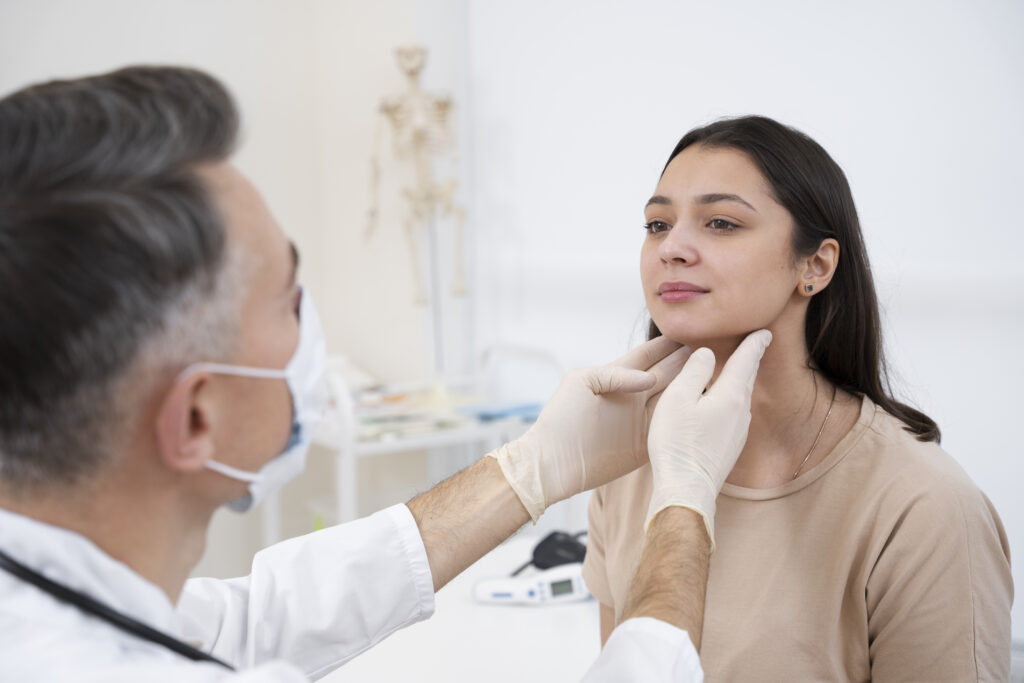
The thyroid is a small, butterfly-shaped gland sitting at the base of your neck — but when it stops working as it should, the impact on your body is anything but small. Fatigue, unexplained weight changes, hair loss, mood swings, or a persistent feeling that something is just not right — these are all signs that your thyroid may need attention.
If you have been searching for a trusted thyroid doctor in Nagercoil, this guide will help you understand your condition, your options, and where to find the right care. Grace Hospital, widely regarded as home to the best general medicine doctors in Marthandam, provides comprehensive thyroid care for patients across the Kanyakumari district.
The thyroid gland produces two key hormones — thyroxine (T4) and triiodothyronine (T3) — that regulate nearly every major function in your body. These hormones control your metabolism, heart rate, body temperature, digestion, mood, and even how quickly your hair and nails grow.
When thyroid hormone levels are off — either too high or too low — it sets off a chain reaction that can affect your energy, weight, sleep, fertility, and mental health. This is why thyroid disorders are often misdiagnosed as stress, depression, or general fatigue, and why seeing a specialist matters.
This is the most common thyroid disorder, particularly among women. The thyroid does not produce enough hormones, causing the body’s functions to slow down.
Symptoms include:
Here, the thyroid produces too much hormone, speeding up the body’s processes.
Symptoms include:
These are lumps or growths within the thyroid gland. Most nodules are benign (non-cancerous), but some can affect hormone production or, rarely, be malignant. A doctor’s evaluation is always necessary.
A goitre refers to an abnormal enlargement of the thyroid gland. It can occur in both hypothyroidism and hyperthyroidism and is often visible as a swelling at the base of the neck.
Though less common, thyroid cancer is one of the more treatable forms of cancer when caught early. Regular checkups and prompt evaluation of any neck swelling are important.
Diagnosing a thyroid condition is simpler than many people expect. A thyroid doctor in Nagercoil will typically begin with:
TSH test (Thyroid Stimulating Hormone) — This is the primary blood test used to assess thyroid function. Elevated TSH suggests hypothyroidism; suppressed TSH suggests hyperthyroidism.
T3 and T4 tests — These measure the actual levels of thyroid hormones in your bloodstream and help confirm the diagnosis.
Thyroid antibody tests — Used to detect autoimmune thyroid conditions such as Hashimoto’s thyroiditis or Graves’ disease.
Ultrasound of the thyroid — An imaging test to examine the size and structure of the gland and identify any nodules or abnormalities.
Fine Needle Aspiration (FNAC) — If a nodule is detected, a small tissue sample may be taken to rule out cancer.
At Grace Hospital, our in-house diagnostics ensure that all these tests are accessible under one roof, reducing the need for patients to travel to multiple facilities.
The treatment for thyroid disease depends entirely on the type and severity of the condition.
For hypothyroidism
The standard treatment is a daily oral medication called levothyroxine, a synthetic form of the T4 hormone. The dose is personalised based on your blood test results and adjusted over time. Most patients manage their condition very well with this medication and regular monitoring.
For hyperthyroidism
Treatment options include anti-thyroid medications that reduce hormone production, radioactive iodine therapy that shrinks the overactive gland, or in some cases, surgery to remove part or all of the thyroid. Your doctor at Grace Hospital will recommend the most appropriate option based on the underlying cause and your overall health.
For thyroid nodules
Benign nodules are usually monitored with periodic ultrasound scans. If a nodule is large, symptomatic, or suspicious, further intervention may be needed.
For thyroid cancer
Treatment typically involves surgical removal of the thyroid (thyroidectomy), followed by radioactive iodine therapy and hormone replacement. Early detection significantly improves outcomes.
Thyroid disorders can affect anyone, but certain groups are at higher risk:
If you fall into any of these categories, a routine thyroid screening is a proactive step worth taking.
Many people live with thyroid symptoms for years without realising the cause. You should consult a thyroid doctor in Nagercoil if you notice:
Early diagnosis makes thyroid conditions far easier to manage, so do not delay seeking a professional opinion.
Grace Hospital has built a strong reputation as the home of the best general medicine doctors in Marthandam, and thyroid care is one of our core areas of expertise.
Expert general medicine team — Our general medicine specialists are experienced in diagnosing and managing the full spectrum of thyroid disorders, from simple hypothyroidism to complex autoimmune conditions.
Comprehensive in-house diagnostics — TSH, T3, T4, and antibody tests, along with thyroid ultrasound, are all available at our facility — no referrals to outside labs needed.
Personalised treatment plans — We understand that every patient’s thyroid condition is unique. Our doctors take the time to understand your symptoms, lifestyle, and medical history before recommending treatment.
Coordinated specialist care — When surgical or advanced intervention is needed, our team coordinates seamlessly with our surgical and oncology units, so your care is uninterrupted.
Accessible location — Conveniently located at P.P.M Junction, Kaliyakkavilai, Grace Hospital serves patients from Nagercoil, Marthandam, and across the Kanyakumari district.
If you have been experiencing symptoms that sound familiar, do not wait for them to worsen. The best general medicine doctors in Marthandam at Grace Hospital are ready to help you get the answers and relief you need.
Call us at 83000 45260 or visit Grace Hospital at P.P.M Junction Kaliyakkavilai, Kanyakumari District, to book your thyroid consultation today.
Grace Hospital is a NABH pre-accredited and an ISO 9001-2015 certified hospital. The hospital is dedicated to serve the people of Kaliyakkavilai (Kanyakumari) with various advanced healthcare facilities and expert doctors from various specialities.
Copyright © 2025 Grace Hospital. All rights reserved.